Asia Petrochemical Trade Flow Market By Product Type, By Feedstock, By Trade Route, By Application, By End-Use Industry, By Region, Competition, Forecast & Opportunities, 2021-2036F
Market Definition
The Asia Petrochemical Trade Flow Market covers the cross-border movement, import, export, transshipment, and intra-regional distribution of petrochemical products manufactured, refined, processed, or consumed across the Asia-Pacific region, encompassing primary olefins including ethylene and propylene, aromatics such as benzene, toluene, paraxylene, and orthoxylene, intermediates covering ethylene glycol, styrene monomer, vinyl chloride monomer, and purified terephthalic acid, alongside downstream commodity polymers such as polyethylene, polypropylene, polyvinyl chloride, polystyrene, polyethylene terephthalate, and engineering thermoplastics. The market includes maritime seaborne trade flows transported through dedicated liquid bulk tankers, gas carriers, and chemical parcel vessels, alongside pipeline flows, rail transport, and intra-regional barge and trucking movements connecting integrated naphtha crackers, ethane-based facilities, refinery-integrated petrochemical complexes, and downstream conversion plants across China, India, South Korea, Japan, Taiwan, Singapore, Thailand, Malaysia, Indonesia, Vietnam, and emerging markets. The market structure encompasses procurement, off-take, and trading activity conducted by integrated oil and gas majors, national oil companies, dedicated petrochemical producers, commodity traders, polymer converters, packaging manufacturers, automotive component suppliers, electronics manufacturers, and end-user industrial buyers operating across the regional value chain. Trade flow patterns are governed by feedstock cost differentials, capacity utilization across regional crackers, regulatory frameworks including free trade agreements such as RCEP, anti-dumping investigations, port infrastructure capacity at major chemical hubs such as Singapore, Ulsan, Yeosu, Map Ta Phut, Jurong Island, and Dahej, alongside logistics networks linking Middle East, North American, and European producers to Asian demand centers across construction, packaging, automotive, electronics, textiles, agriculture, and consumer goods sectors.
Market Insights
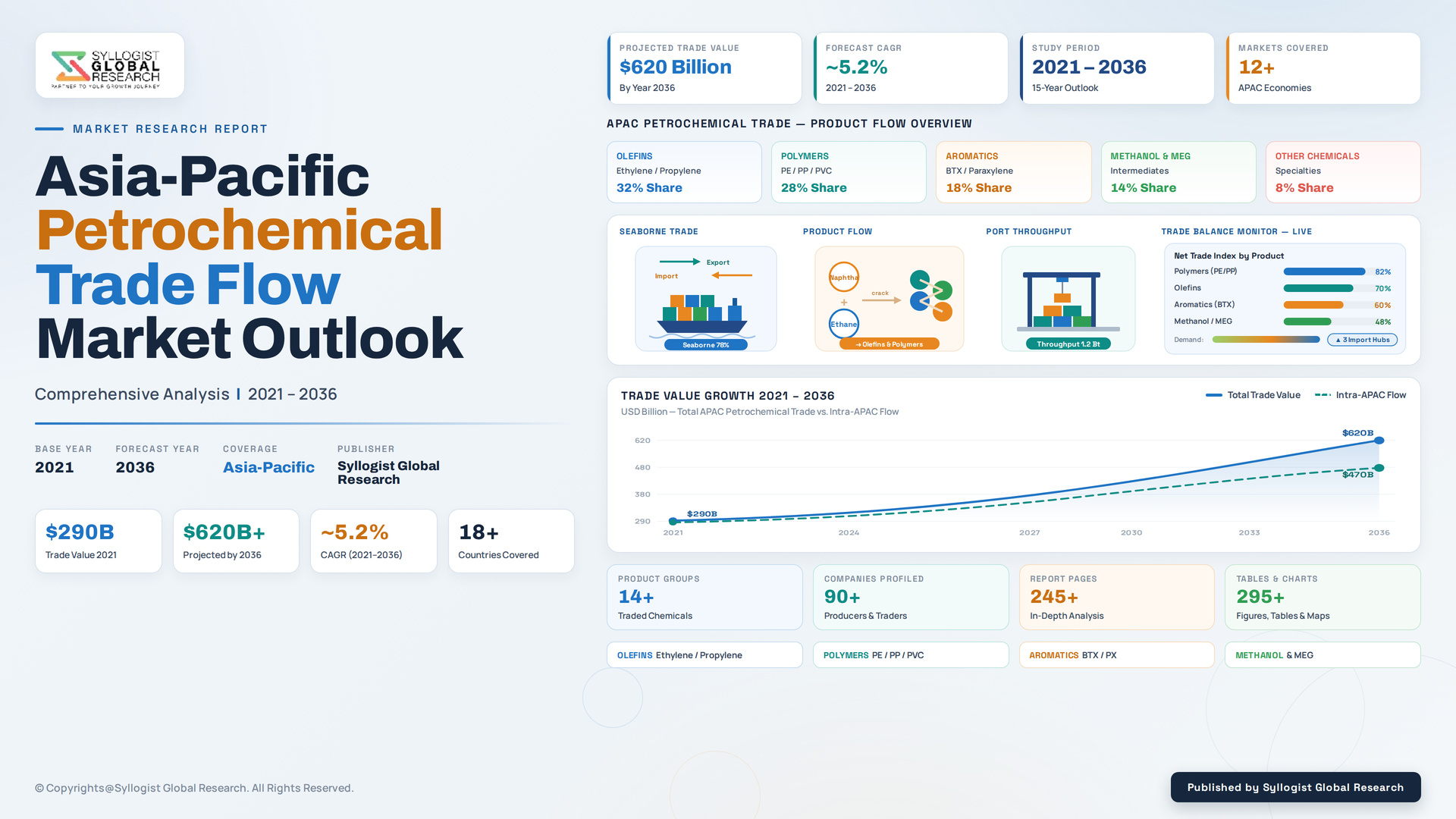
The Asia petrochemical trade flow market is undergoing a structural realignment of supply and demand corridors, driven by the commissioning of substantial new ethylene and propylene capacity across China, Southeast Asia, and the Middle East, alongside an evolving demand mix shaped by maturing consumption in Northeast Asia and accelerating downstream conversion activity across India, Vietnam, Indonesia, and Bangladesh. The market was valued at USD 312.4 billion in 2025 and is projected to reach USD 564.8 billion by 2034, advancing at a compound annual growth rate of 6.8% through the forecast period, as intra-regional trade intensity deepens, feedstock cost differentials reshape competitive positioning, and downstream polymer demand continues to scale alongside urbanization, industrialization, and consumer packaging growth across the broader Asia-Pacific region.
China remains the single largest consumer and importer within the Asia petrochemical trade flow market, even as the country accelerates a multi-decade self-sufficiency drive that has lifted domestic ethylene capacity above 60 million tonnes in 2025, compressing import dependence for ethylene-derived polymers including polyethylene and ethylene glycol. The structural shift in Chinese trade balances is reshaping flow patterns across the region, with South Korean, Japanese, and Taiwanese producers redirecting volumes toward India, Vietnam, Bangladesh, and emerging Southeast Asian buyers as Chinese import demand softens for select product categories. Paraxylene, mixed xylenes, and polyethylene terephthalate trade flows remain particularly dynamic, with Chinese imports of paraxylene declining sharply from peak levels following the commissioning of integrated aromatics complexes at Hengli, Zhejiang, Shenghong, and other mega-projects, while polyester chain demand from India and Southeast Asia is creating new offtake destinations for regional aromatics surplus.
Middle Eastern producers continue to expand their structural advantage in the Asia trade flow market, leveraging ethane and propane feedstock cost positions that translate into ethylene cash costs 40% to 55% below naphtha-based Northeast Asian crackers, sustaining durable export competitiveness into India, China, Pakistan, and Southeast Asia. Saudi Arabia, the United Arab Emirates, Qatar, Iran, and Oman together account for over 35% of polyethylene and ethylene glycol imports across South and East Asia, with new integrated complexes including Ras Laffan Petrochemicals, Amiral, and the Duqm refinery and petrochemical project set to add over 9 million tonnes of incremental olefin capacity targeting Asian markets between 2026 and 2030. North American shale-based ethane producers are similarly intensifying Asian exports, with United States polyethylene shipments to China, Vietnam, and India growing at double-digit rates as Gulf Coast capacity additions outpace domestic demand absorption.
Regional logistics infrastructure, port capacity, and terminal investment are emerging as critical determinants of Asia petrochemical trade flow efficiency, with Singapore, Ulsan, Yeosu, Map Ta Phut, Jurong Island, Dahej, Mundra, and Mailiao functioning as the principal regional hubs handling polymer transshipment, parcel chemical movement, and gas carrier traffic. Freight rate volatility, container shortage cycles, and Red Sea routing disruptions following Houthi attacks have materially elevated supply chain costs and lengthened delivery lead times between Middle Eastern, European, and Asian markets through 2024 and 2025, prompting Asian buyers to diversify sourcing geographies and renegotiate long-term offtake terms. The Regional Comprehensive Economic Partnership and bilateral free trade agreements are simultaneously reshaping tariff structures, while anti-dumping investigations launched by India, Indonesia, and Vietnam against selected polyethylene, polypropylene, and PVC origins are introducing new friction into trade flow optimization for regional producers and traders.
Key Drivers
Persistent Demand Growth Across India, Southeast Asia, and Emerging South Asian Markets Sustaining Long-Term Polymer Import Requirements
Polymer demand growth across India, Vietnam, Indonesia, Bangladesh, Pakistan, and the Philippines is sustaining durable import requirements for polyethylene, polypropylene, PVC, and PET, with regional consumption advancing at 6% to 9% CAGR through 2034, supported by packaging sector expansion, infrastructure construction, automotive production scaling, and rising per capita plastics consumption. India alone is expected to add over 11 million tonnes of incremental polymer demand by 2034, anchoring long-term import flows from Middle Eastern and Northeast Asian producers, while Vietnam and Indonesia are emerging as high-growth offtake markets for both commodity polymers and specialty intermediates.
Middle Eastern Feedstock Cost Advantage and Mega-Project Capacity Additions Reinforcing Structural Export Flows into Asia
Persistent ethane and propane feedstock advantages across Saudi Arabia, Qatar, the United Arab Emirates, Iran, and Oman are reinforcing structural export competitiveness into Asian polymer markets, with integrated complexes commissioning between 2026 and 2030 expected to add over 14 million tonnes of incremental olefin and polymer capacity targeting Asian demand centers. The cost differential between Middle Eastern ethane crackers and Northeast Asian naphtha crackers continues to underpin durable trade flows into India, China, and Southeast Asia, with new terminal infrastructure at Ras Laffan, Ruwais, and Yanbu enabling expanded parcel sizes.
Downstream Polymer Conversion Capacity Expansion and Manufacturing Migration into Southeast Asia Generating Intra-Regional Trade Intensification
Accelerating downstream conversion capacity additions across Vietnam, Thailand, Indonesia, Malaysia, and Bangladesh, supported by manufacturing migration from China under the China Plus One strategy, are intensifying intra-regional petrochemical trade flows. Polymer converters, packaging manufacturers, and electronics producers expanding in these markets are driving incremental demand for polyethylene, polypropylene, ABS, and engineering thermoplastics, with intra-ASEAN trade flows growing at 8% to 10% CAGR through 2034.
Key Challenges
Chinese Self-Sufficiency Drive and Naphtha Cracker Capacity Overbuild Compressing Regional Margins and Reshaping Trade Balances
China has added over 25 million tonnes of ethylene capacity between 2020 and 2025, with another 18 million tonnes of new capacity scheduled by 2030, materially compressing import dependence and triggering operating rate declines at Northeast Asian naphtha crackers below 80% across multiple quarters in 2024 and 2025. Margin compression across Korean, Japanese, and Taiwanese producers is forcing structural rationalization, capacity closures, and asset sales, while Chinese export availability of polyethylene, polypropylene, and PVC is rising and creating downward price pressure across South and Southeast Asia.
Anti-Dumping Investigations, Tariff Escalations, and Trade Policy Friction Constraining Cross-Border Flow Optimization
Anti-dumping investigations launched by India, Indonesia, Vietnam, and the Philippines against selected polyethylene, polypropylene, PVC, PET resin, and butadiene origins are introducing material trade friction, with provisional duties ranging from 8% to 32% applied to imports from China, South Korea, Saudi Arabia, and Singapore across various product categories. Escalating tariff frameworks, evolving rules of origin under RCEP, and bilateral trade tensions are complicating contract negotiation, supplier qualification, and inventory positioning decisions for traders, distributors, and polymer converters operating across the regional value chain.
Sustainability Regulation, Circular Economy Mandates, and Extended Producer Responsibility Reshaping Virgin Polymer Trade Flows
Tightening sustainability regulation across India, South Korea, Japan, Singapore, and the European Union, including extended producer responsibility mandates, single-use plastic restrictions, and minimum recycled content thresholds, is reshaping virgin polymer demand patterns and creating competitive pressure on traditional trade flow architectures. India has imposed extended producer responsibility obligations covering over 30% of packaging applications from 2024, while South Korea, Japan, and Thailand are advancing recycled content mandates that will progressively displace virgin polymer imports across selected end-use categories through 2034.
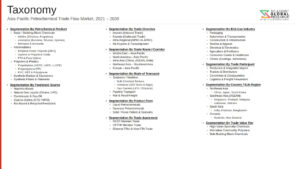
Market Segmentation
- Segmentation By Product Type
- Olefins (Ethylene, Propylene, Butadiene)
- Aromatics (Benzene, Toluene, Paraxylene, Orthoxylene)
- Intermediates (Ethylene Glycol, Styrene Monomer, VCM, PTA)
- Commodity Polymers (PE, PP, PVC, PS, PET)
- Engineering Thermoplastics (ABS, Polycarbonate, Nylon)
- Synthetic Rubber and Elastomers
- Others
- Segmentation By Feedstock
- Naphtha
- Ethane and LPG
- Coal and Methanol (MTO/MTP)
- Natural Gas Liquids
- Refinery-Integrated Feedstock
- Bio-Based and Recycled Feedstock
- Others
- Segmentation By Trade Route
- Middle East to South Asia
- Middle East to Northeast Asia
- Middle East to Southeast Asia
- North America to Asia
- Intra-Northeast Asia
- Intra-Southeast Asia
- Europe to Asia
- Others
- Segmentation By Application
- Packaging Films and Containers
- Construction Materials and Pipes
- Automotive Components
- Electronics and Electrical Goods
- Textiles and Fibers
- Agriculture and Greenhouse Films
- Consumer Goods and Appliances
- Others
- Segmentation By End-Use Industry
- Packaging
- Construction and Infrastructure
- Automotive and Transportation
- Electronics and Electricals
- Textiles and Apparel
- Agriculture
- Consumer Goods
- Healthcare and Medical Devices
- Others
- Segmentation By Region
- Northeast Asia (China, Japan, South Korea, Taiwan)
- Southeast Asia (Singapore, Thailand, Malaysia, Indonesia, Vietnam, Philippines)
- South Asia (India, Pakistan, Bangladesh, Sri Lanka)
- Middle East Trade Partners
- Other Asia-Pacific
All market revenues are presented in USD
Historical Year: 2021-2024 | Base Year: 2025 | Estimated Year: 2026 | Forecast Period: 2027-2034
Key Questions this Study Will Answer
- What is the total market valuation of the Asia Petrochemical Trade Flow Market in 2025, projected through 2034, disaggregated by product type, trade route, and end-use industry, enabling producers, traders, polymer converters, and investors to identify the highest-growth flow corridors and most durable trade opportunities across the Asia-Pacific petrochemical value chain?
- How is the Chinese petrochemical self-sufficiency drive reshaping ethylene, propylene, aromatics, and polymer trade balances across Northeast Asia, and what redirected flow patterns are emerging into India, Vietnam, Indonesia, Bangladesh, and other South and Southeast Asian destinations through 2034?
- Which Middle Eastern producers, including Saudi Arabia, Qatar, the United Arab Emirates, Iran, and Oman, are positioned to capture incremental Asian polymer demand growth, and how are mega-project capacity additions including Ras Laffan Petrochemicals, Amiral, and Duqm reshaping competitive positioning into Asian offtake markets?
- How are anti-dumping investigations, RCEP tariff frameworks, and bilateral trade policy frictions across India, Indonesia, Vietnam, and the Philippines reshaping cross-border flow economics, and what trade strategy adjustments are leading producers and commodity traders pursuing to maintain market access and margin stability?
- Which downstream polymer applications including packaging, construction, automotive, electronics, and textiles are generating the highest incremental import demand across India, Southeast Asia, and South Asia, and how is manufacturing migration under the China Plus One strategy intensifying intra-regional trade flows through 2034?
- How are sustainability regulations, extended producer responsibility frameworks, and recycled content mandates across Asia and key export markets reshaping virgin polymer trade flow architectures, and what role will bio-based, recycled, and circular feedstock pathways play in Asia petrochemical trade through 2034?
- How is the competitive landscape structured among integrated oil and gas majors, national oil companies, dedicated petrochemical producers, and commodity traders operating across Asia, and what partnership, joint venture, terminal investment, and offtake strategies are reshaping trade flow control and margin capture across the regional value chain?
- Product Definition
- Research Methodology
- Research Design & Framework
- Overall Research Approach: Descriptive, Exploratory & Quantitative Mixed-Method Design
- Market Definition & Scope Boundaries: What is Included and Excluded
- Segmentation Framework
- Key Research Assumptions & Limitations
- Secondary Research
- Primary Research Design & Execution
- Data Triangulation & Validation
- Market Sizing & Forecasting Methodology
- Competitive Intelligence Methodology
- Quality Assurance & Peer Review
- Definitions, Abbreviations & Data Notes
- Research Design & Framework
- Executive Summary
- Market Snapshot & Headline Numbers
- Key Findings & Research Highlights
- Market Dynamics
- Sub-Regional Market Summary
- Competitive Landscape Snapshot
- Technology & Innovation Highlights
- Market Dynamics
- Drivers
- Restraints
- Opportunities
- Challenges
- Porter’s Five Forces Analysis
- PESTLE Analysis
- Market Trends & Developments
- Emerging Trends
- Technological Developments
- Regulatory & Policy Changes
- Shipping, Logistics & Port Infrastructure Trends
- Trade Lane & Capacity Reconfiguration Trends
- Investment & Funding Activity
- Sustainability & ESG Trends
- Risk Assessment Framework
- Supply Chain Disruption, Port Congestion, Maritime Chokepoint & Shipping Bottleneck Risk
- Geopolitical Tension, Trade War, Sanctions & Cross-Border Policy Coordination Risk
- Tariff, Anti-Dumping Duty, Countervailing Duty & Non-Tariff Barrier Risk
- Currency Volatility, Trade Finance, Payment Default & Letter of Credit Risk
- Demand Cyclicality, Capacity Overbuild, Inventory Destocking & Margin Compression Risk
- Regulatory Framework & Standards
- Free Trade Agreements (RCEP, CPTPP, ASEAN FTA, India-ASEAN & Bilateral FTAs) Applicable to Petrochemical Trade
- Customs, Tariff Classification, Rules of Origin & Trade Facilitation Standards
- Anti-Dumping, Countervailing Duty & Trade Remedy Investigations on Petrochemical Products
- Maritime, Port, Hazardous Cargo Handling & IMO Compliance Standards for Petrochemical Shipping
- Environmental, Carbon Border Adjustment & Sustainable Trade Disclosure Standards
- Asia-Pacific Petrochemical Trade Flow Market Outlook
- Market Size & Forecast by Value
- Market Size & Forecast by Volume (Million Tons)
- Market Size & Forecast by Product Category
- Olefins (Ethylene, Propylene, Butadiene & C4 Streams)
- Aromatics (Benzene, Toluene, Xylenes & Styrene)
- Polyolefins (HDPE, LDPE, LLDPE & Polypropylene)
- Other Polymers (PVC, PS, PET, ABS, PC & Engineering Plastics)
- Polymer Intermediates (MEG, PTA, EDC, VCM, Acrylonitrile & Caprolactam)
- Methanol & Derivatives (Formaldehyde, Acetic Acid, MTBE & MEG)
- Synthetic Rubber & Elastomers (SBR, BR, EPDM & Specialty Elastomers)
- Industrial Chemicals, Solvents & Specialty Petrochemicals
- Fertilizer Petrochemicals (Ammonia, Urea & Methanol-Based Nitrogenous Products)
- Market Size & Forecast by Trade Direction
- Imports
- Exports
- Re-Exports & Transshipment
- Intra-Regional Trade
- Net Trade Balance
- Market Size & Forecast by Trade Lane (Origin-Destination)
- Middle East to Asia-Pacific Trade Lane
- North America to Asia-Pacific Trade Lane
- Russia / CIS to Asia-Pacific Trade Lane
- Intra-Asia-Pacific Trade (Northeast Asia to Southeast Asia)
- Intra-Asia-Pacific Trade (Southeast Asia to South Asia)
- Asia-Pacific to Europe Trade Lane
- Asia-Pacific to Latin America Trade Lane
- Asia-Pacific to Africa Trade Lane
- Market Size & Forecast by Trade Mode
- Maritime & Sea Freight
- Cross-Border Pipeline
- Rail & Road Logistics
- Multi-Modal Logistics
- Market Size & Forecast by Shipping & Vessel Type
- Chemical Parcel Tankers
- LPG, LNG & Gas Carriers (Olefin & Light Hydrocarbon Transport)
- Bulk Polymer & Container Shipping
- ISO Tank Containers & Flexitanks
- Break-Bulk & Specialty Cargo
- Market Size & Forecast by End-Use Industry
- Plastics Converters & Packaging Manufacturers
- Automotive & Transportation
- Construction & Infrastructure
- Textiles & Apparel
- Electronics & Electricals
- Agriculture & Fertilizer
- Consumer Goods & FMCG
- Pharmaceuticals & Personal Care
- Market Size & Forecast by Trade Channel
- Producer Direct Sales & Bilateral Contracts
- Trading Houses & Commodity Traders
- Distributors, Agents & Brokers
- Spot Market & Exchange-Traded Channels
- Long-Term Offtake & Tolling Contracts
- China Petrochemical Trade Flow Market Outlook
- Market Size & Forecast
- By Value
- By Volume (Million Tons)
- By Product Category
- By Trade Direction
- By Trade Lane (Origin-Destination)
- By Trade Mode
- By Shipping & Vessel Type
- By End-Use Industry
- By Country
- By Trade Channel
- Northeast Asia (Japan, South Korea & Taiwan) Petrochemical Trade Flow Market Outlook
- Market Size & Forecast
- By Value
- By Volume (Million Tons)
- By Product Category
- By Trade Direction
- By Trade Lane (Origin-Destination)
- By Trade Mode
- By Shipping & Vessel Type
- By End-Use Industry
- By Country
- By Trade Channel
- Southeast Asia (ASEAN) Petrochemical Trade Flow Market Outlook
- Market Size & Forecast
- By Value
- By Volume (Million Tons)
- By Product Category
- By Trade Direction
- By Trade Lane (Origin-Destination)
- By Trade Mode
- By Shipping & Vessel Type
- By End-Use Industry
- By Country
- By Trade Channel
- South Asia (India & Subcontinent) Petrochemical Trade Flow Market Outlook
- Market Size & Forecast
- By Value
- By Volume (Million Tons)
- By Product Category
- By Trade Direction
- By Trade Lane (Origin-Destination)
- By Trade Mode
- By Shipping & Vessel Type
- By End-Use Industry
- By Country
- By Trade Channel
- Oceania (Australia & New Zealand) Petrochemical Trade Flow Market Outlook
- Market Size & Forecast
- By Value
- By Volume (Million Tons)
- By Product Category
- By Trade Direction
- By Trade Lane (Origin-Destination)
- By Trade Mode
- By Shipping & Vessel Type
- By End-Use Industry
- By Country
- By Trade Channel
- Country-Wise* Petrochemical Trade Flow Market Outlook
- Market Size & Forecast
- By Value
- By Volume (Million Tons)
- By Product Category
- By Trade Direction
- By Trade Lane (Origin-Destination)
- By Trade Mode
- By Shipping & Vessel Type
- By End-Use Industry
- By Country
- By Trade Channel
- *Countries Analyzed in the Syllogist Asia-Pacific Research Portfolio: China, Japan, South Korea, Taiwan, India, Bangladesh, Pakistan, Singapore, Thailand, Indonesia, Malaysia, Vietnam, Philippines, Australia, New Zealand
- Technology Landscape & Innovation Analysis
- Digital Trade Documentation, Blockchain & Smart Contract Technology for Petrochemical Trade
- Shipment Tracking, AIS Analytics & Maritime Visibility Platform Technology
- Port Automation, Terminal Operating System & Liquid Bulk Handling Technology
- Customs Digitalisation, Single Window & Electronic Bill of Lading (eBL) Technology
- Trade Finance Digitalisation, Letter of Credit Automation & Supply Chain Finance Platforms
- Predictive Analytics, AI-Based Trade Forecasting & Demand Sensing Platforms
- Carbon Accounting, Emissions Tracking & Sustainable Shipping Technology
- Patent & IP Landscape in Petrochemical Trade & Logistics Technologies
- Value Chain & Supply Chain Analysis
- Petrochemical Producer, Refinery & Export Terminal Linkage
- Maritime Logistics, Chemical Parcel Tanker & Gas Carrier Fleet Supply Chain
- Port Infrastructure, Storage Terminal, Pipeline & Liquid Bulk Handling Network
- Trading Houses, Commodity Traders & Distribution Intermediary Landscape
- Trade Finance, Marine Insurance & Cargo Risk Management Services
- Customs Brokerage, Compliance, Inspection & Trade Documentation Services
- Last-Mile Delivery, Inland Transport & Converter / End-User Channel
- Pricing Analysis
- Olefin Trade Price Trend Analysis (CFR China, FOB Korea & Japan)
- Aromatics & BTX Trade Price Trend Analysis (CFR Asia & FOB Southeast Asia)
- Polyolefin & Polymer Trade Price Trend Analysis (CFR Asia Benchmarks)
- Polymer Intermediate (MEG, PTA, VCM) Trade Price & Margin Analysis
- Freight Rate, Bunker Cost & Shipping Cost Trend Analysis
- Tariff Impact, Anti-Dumping Duty & Trade Remedy Cost Pass-Through Analysis
- Trade Arbitrage, Inter-Regional Price Differential & Margin Capture Analysis
- Sustainability & Environmental Analysis
- Lifecycle Carbon Footprint of Petrochemical Maritime Trade: Scope 3 Emissions Across Trade Lanes & Shipping Modes
- IMO 2030 / 2050 Decarbonisation Pathway, FuelEU Maritime & Implications for Petrochemical Shipping
- Carbon Border Adjustment Mechanism (CBAM) & Cross-Border Trade Carbon Pricing Impact on Asia-Pacific Exporters
- Circular Economy, Plastic Waste Trade (Basel Convention Amendment) & Recycled Polymer Trade Flow Implications
- Sustainable Trade Finance, Green Shipping Corridors & SDG 12 (Responsible Consumption) Alignment
- Competitive Landscape
- Market Structure & Concentration
- Market Consolidation Level (Fragmented vs. Consolidated by Product Category & Trade Lane)
- Top 10 Players Market Share
- HHI (Herfindahl-Hirschman Index) Concentration Analysis
- Competitive Intensity Map by Product Category, Trade Lane & Sub-Region
- Player Classification
- Integrated National Oil & Petrochemical Companies (Sinopec, PetroChina, Reliance, Indian Oil)
- Integrated Petrochemical Majors (SABIC, Lotte, LG Chem, Formosa, ExxonMobil, Shell)
- Asia-Pacific Trading Houses (Mitsui, Mitsubishi, Itochu, Sumitomo, Marubeni & SK Trading)
- Global & Independent Petrochemical Traders, Brokers & Aggregators
- Chemical Shipping & Maritime Logistics Companies (Stolt-Nielsen, Odfjell, Navig8 & MOL Chemical)
- Port Operators, Storage Terminal Operators & Liquid Bulk Hub Operators
- Customs Brokers, Trade Compliance & Inspection Service Providers
- Trade Finance, Marine Insurance & Cargo Risk Specialists
- Competitive Analysis Frameworks
- Market Share Analysis by Product Category, Trade Lane & Sub-Region
- Company Profile
- Company Overview & Headquarters
- Petrochemical Trade Portfolio & Product Coverage
- Key Customer Relationships & Reference Trade Lanes
- Asset Footprint, Fleet & Terminal Capacity
- Revenue (Petrochemical Trade Segment) & Order Book
- Technology Differentiators & IP
- Key Strategic Partnerships, JVs & M&A Activity
- Recent Developments (Contract Wins, Capacity Expansion, Trade Lane Launches)
- SWOT Analysis
- Strategic Focus Areas & Roadmap
- Competitive Positioning Map (Trade Capability vs. Market Penetration)
- Key Company Profiles
- Market Structure & Concentration
- Technology Landscape & Innovation Analysis
- Strategic Output
- Market Opportunity Matrix: By Product Category, Trade Lane, End-Use, Trade Channel & Sub-Region
- White Space Opportunity Analysis
- Strategic Recommendations
- Product Portfolio & Trade Lane Investment Strategy
- Shipping, Logistics & Terminal Operational Excellence Strategy
- Geographic Expansion & Sub-Regional Localisation Strategy
- Customer, Offtake & Counterparty Engagement Strategy
- Partnership, M&A & Ecosystem Strategy
- Sustainability, Decarbonisation & Circular Trade Strategy
- Risk Mitigation & Future Roadmap
- Strategic Priority Matrix & Roadmap
- Near-term (2025-2028)
- Mid-term (2029-2032)
- Long-term (2033-2037)
- Market Size & Forecast
- Market Size & Forecast
- Market Size & Forecast
- Market Size & Forecast
- Market Size & Forecast
- Market Size & Forecast