Market Definition
The Data Centers market comprises a broad spectrum of digital infrastructure facilities, including hyperscale data centers, colocation facilities, enterprise data centers, edge and micro data centers, designed to host IT hardware, manage large-scale data processing, and support cloud computing, AI/ML workloads, storage, and networking operations. Data centers form the backbone of the global digital economy by enabling compute availability, data resilience, and high-speed connectivity for enterprises, governments, cloud providers, and digital-native companies. Over the past two years, the global data center industry has been influenced significantly by hyperscale expansion cycles, power and land constraints, supply chain disruptions (particularly in electrical and cooling equipment), and strong demand from cloud, AI, and high-performance computing applications.
Market Insights
Global data center demand has been strongly shaped by AI/ML adoption, cloud migration, and major supply chain imbalances triggered by semiconductor shortages, shipping delays, and long lead times for power and cooling equipment such as UPS systems, switchgear, chillers, and generators. The years 2021 and 2022 witnessed aggressive expansion by hyperscalers and colocation providers driven by remote work, OTT content growth, and accelerated digital transformation across enterprises. Edge data center deployment also gained momentum during this period, supported by 5G rollout, IoT adoption, and the need for low-latency compute closer to end users.
Demand normalized in 2023 as supply chains improved and construction pipelines stabilized; however, global MW absorption remains exceptionally strong due to surging AI compute requirements, GPU-based workloads, and cloud-native application growth. The sector is increasingly shaped by sustainability imperatives such as renewable energy sourcing, lower PUE (Power Usage Effectiveness) targets, advancements in liquid cooling, and carbon-neutral infrastructure design. Digital twins, automation, high-density rack architectures, and prefabricated modules are further improving deployment speed, operational efficiency, and scalability.
Industry projections indicate that the global data center market will continue expanding at a high CAGR of 10–14% between 2026 and 2035, driven primarily by North America, Asia-Pacific, and Western Europe, regions experiencing strong hyperscale expansion, cloud availability zone additions, and AI campus development. Meanwhile, emerging markets in the Middle East, Africa, and Latin America are witnessing rising investment interest from global operators due to favorable policies, connectivity upgrades, and growing enterprise digital adoption.
Regulatory tightening, especially around carbon reporting, renewable energy mandates, water consumption norms, and AI workload power requirements, is reshaping facility design and operational models. Countries such as India, Singapore, UAE, and Ireland are implementing power-allocation regulations and environmental guidelines that push data center operators toward green energy procurement, modular cooling, liquid cooling adoption, and high-efficiency electrical systems. However, the market remains vulnerable to power availability constraints, rising land and energy costs, high CAPEX intensity, and evolving environmental compliance standards that require operators to rapidly upgrade their infrastructure and capacity planning models.
Market Dynamics: Drivers
Surging data consumption, cloud adoption, AI/ML workload growth, and enterprise digital transformation are major drivers accelerating global data center demand. Large-scale hyperscaler investments, expansion of availability zones, and the need for low-latency infrastructure support exponential deployment of compute and storage capacity. 5G rollout, Industry 4.0, fintech digitization, and hybrid-multicloud adoption further contribute to sustained market growth. Increasing regulatory focus on data sovereignty and local storage requirements is also pushing enterprises to deploy or lease more localized capacity. Meanwhile, innovations in liquid cooling, modular construction, and renewable energy integration are enabling faster, more efficient build-outs.
Market Dynamics: Challenges
The data center industry faces several challenges, including severe power constraints in major hubs, long construction lead times, supply dependence on key electrical and cooling components, and escalating operating costs driven by energy price volatility. Environmental norms around water usage, carbon emissions, and cooling efficiency place additional pressure on operators. Grid instability, land scarcity in prime data center clusters, and geopolitical disruptions affecting semiconductors and IT hardware further complicate capacity expansion efforts. The sector must also manage cybersecurity risks, high-density AI workloads, and the rising need for skilled data center operations personnel. Additionally, CAPEX intensity, sustainability mandates, and the complexity of deploying next-generation AI-ready infrastructure require robust long-term planning and investment.
Market Segmentation
Based on Data Center Type, the Global Data Centers Market is segmented into:
- Hyperscale Data Centers
• Colocation Data Centers
• Enterprise Data Centers
• Edge & Micro Data Centers
• Modular/Prefabricated Data Centers
• High-Density AI Data Centers
• Others
Based on Infrastructure Component:
- Power Infrastructure (UPS, Switchgear, Transformers, Generators)
• Cooling Infrastructure (CRAH/CRAC, Chillers, Liquid Cooling, Immersion Cooling)
• Racks & Containment
• IT Infrastructure (Servers, Storage, Networking)
• Monitoring & Automation Systems (DCIM, Digital Twins)
Based on Application:
- Cloud & IT Services
• BFSI
• Government & Public Sector
• Telecom & Media
• Healthcare
• Manufacturing & Industrial
• Retail & E-Commerce
• AI/ML & High-Performance Computing
Based on Distribution Channel / Ownership Model:
- Self-Build / Captive
• Retail Colocation
• Wholesale Colocation
• Cloud/Hybrid Models
• Build-to-Suit
• Managed Hosting
All market revenues are presented in USD, with capacities expressed in MW, number of racks, and sq. ft. of white space.
Historical Year: 2020–2025 | Base Year: 2026 | Estimated Year: 2027 | Forecast Period: 2028–2035
Key Questions this Study Will Answer
- What are the key market statistics and forecasts (market size by value, MW capacity, rack additions, segment growth trends) for the Global Data Centers Market?
- What are the region-wise market dynamics, growth drivers, challenges, capacity pipelines, and build-out trends?
- What are the major technology innovations, regulatory shifts, sustainability mandates, and opportunities shaping the data center landscape?
- Who are the leading competitors, and how do they benchmark across capacity scale, power efficiency, connectivity strength, sustainability, and service offerings?
- What insights emerge from interviews with operators, hyperscalers, OEMs, cloud architects, and ecosystem stakeholders conducted during the market assessment?
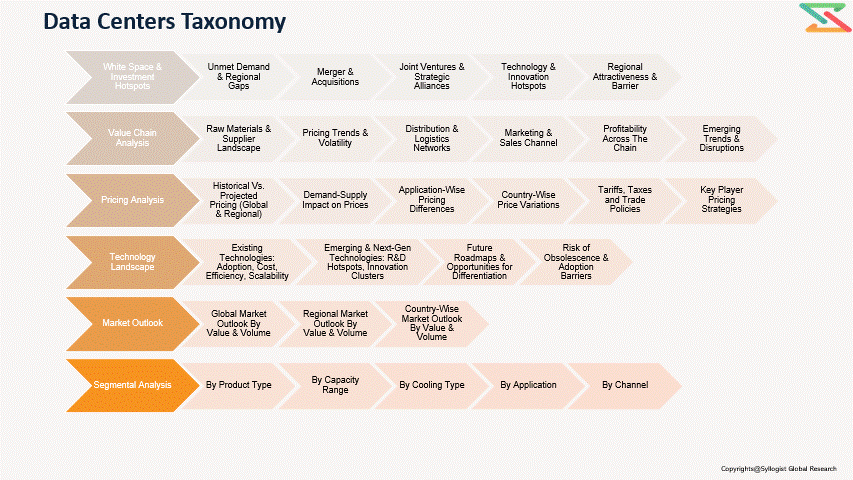
- Market Foundations & Dynamics
- Introduction
- Product Overview (Definition & Scope of Data Centers: Hyperscale, Colocation, Enterprise, Edge, Micro Data Centers)
- Data Center Value Chain Overview (Site Selection → Design & Engineering → Construction → IT & Power Deployment → Operations & Maintenance)
- Research Methodology
- Executive Summary
- Major Trends Shaping the Market (AI/ML Workloads, Cloud Migration, Sustainability Mandates, Liquid Cooling, Modular Builds)
- Short-Term vs. Long-Term Opportunities
- Comparison of Key Data Center Types (Hyperscale, Colocation, Enterprise, Edge)
- Scenario Planning (Base, Optimistic, Conservative Build-Out Scenarios)
- Sensitivity Analysis (Power Tariffs, Land Costs, Supply Chain Lead Times, IT Hardware Prices)
- Identification of Regional Growth Hotspots
- Market Dynamics
- Drivers
- Restraints
- Opportunities
- Challenges
- Porter’s Five Forces Analysis
- PESTLE Analysis
- Introduction
- Market Ecosystem & Value Chain
- Overview of Value Chain Participants
- Land Developers & Power Providers
- Design & Engineering Firms
- EPC & Construction Contractors
- Power & Cooling Infrastructure Suppliers (UPS, Switchgear, Generators, Chillers, CRAH/CRAC, Liquid Cooling)
- IT Infrastructure Providers (Servers, Storage, Networking, Racks)
- Data Center Operators (Hyperscale, Colocation, Enterprise)
- Connectivity & Cloud Service Providers
- Flow of Value & Material Through the Chain
- Value Addition & Margins at Each Stage
- Construction
- Power & Cooling Integration
- IT Deployment
- Operations & Facility Management
- Integration Trends (Renewables, On-Site Power, Software-Defined Infrastructure)
- Impact of Vertical Integration
- Mapping of Roles & Interdependencies
- Market Trends & Developments
- White Space Analysis
- Demand Supply Analysis
- Demand–Supply Gaps (MW Shortages, Land Constraints, Grid Availability)
- Unmet Needs (High-Density Cooling, AI-Optimized Workloads, Sustainable Power Solutions)
- Risk Assessment Framework
- Political / Geopolitical Risk (Chip Supply Constraints, Energy Trade Disruptions)
- Operational Risk (Downtime, Cooling Failures, Cybersecurity Threats)
- Environmental Risk (Carbon Emissions, Water Consumption)
- Financial Risk (High CAPEX, Interest Rate Sensitivity)
- Regulatory Framework & Standards
- Global Regulatory Overview
- Data Center Tier & Operational Standards (Uptime Institute, ISO Standards)
- Energy Efficiency & Cooling Regulations (ASHRAE, EU Energy Mandates)
- Environmental Compliance (PUE/WUE Norms, Carbon Reporting)
- Local Country Regulations (Power Allocation, Data Sovereignty, Environmental Clearances)
- Construction, Safety & Electrical Regulations
- Safety & Quality Standards (Fire Suppression, Redundancy Requirements)
- Environmental Compliance (Water Usage Norms, Renewable Energy Mandates)
- Liability & Insurance Requirements
- Digital Traceability (DCIM Systems, Automated Monitoring)
- Technology Landscape
- Power Infrastructure Technologies (UPS, Generators, Battery Storage)
- Cooling Innovations (Liquid Cooling, Immersion Cooling, Rear-Door Heat Exchangers)
- Modular & Prefabricated Data Centers
- Monitoring & Automation Tools (DCIM, Digital Twins, AI-Based Predictive Maintenance)
- IT Infrastructure Evolution (GPU Servers, High-Density Racks, Disaggregated Architecture)
- Future Outlook (AI Compute Growth, Quantum-Ready Designs, Carbon-Neutral Facilities)
- Global, Regional & Country Forecasts (2019–2029)
- Global Data Center Market Outlook (Value & Volume)
- Market Share by:
- Product Type: Hyperscale, Colocation, Enterprise, Edge
- Capacity Range (≤5 MW, 5–20 MW, 20–50 MW, ≥50 MW)
- Cooling Type (Air Cooling, Liquid Cooling, Hybrid)
- Application (IT/Cloud, BFSI, Government, Manufacturing, Telecom)
- Channel (Self-Build, Colocation, Cloud)
- Company
- Regional Outlook (North America, Europe, Asia-Pacific, Latin America, Middle East & Africa)
- Pricing Analysis
- Overview of Pricing Structures (Per MW Build Cost, Per Rack Cost, Per Sq. Ft.)
- Price Trends by Product Type (Power Infra, Cooling, Racks, IT Hardware)
- Cost Benchmark
- Power vs Cooling Infrastructure Cost Split
- Onshore vs Offshore Construction Costs
- Price Sensitivity (Steel, Copper, Electrical Components)
- Historical Pricing (2019–2023)
- Forecast Pricing (2024–2029)
- Factors Influencing Price
- Raw Material Availability
- Energy Costs
- Logistics
- Regulatory Burden
- R&D & Technology Costs
- Regional Pricing Differentiation
- Impact of Sustainability Transition
- Competition Outlook
- Market Concentration vs Fragmentation
- Company Market Shares
- Competitive Strategies
- Capacity Expansion
- Geographic Expansion
- Renewable Energy Integration
- Technology Alliances
- Benchmarking Matrix (Scale vs Efficiency vs Innovation)
- Recent Developments (M&A, New Builds, AI/ML Workload Deployments)
- Cost Structure & Margin Analysis
- Detailed Cost Breakdown
- Average Cost per Stage
- Profitability & Margin Distribution
- Sensitivity Analysis (Power Cost, Hardware Cost, Construction Cost)
- Cost Reduction Opportunities (Modular Builds, Prefab Construction, Automation)
- Business Models & Strategic Insights
- Hyperscale Self-Build Models
- Colocation Operators
- Cloud-Integrated Models
- Build-to-Suit & Lease Models
- PPP Models for Digital Infrastructure
- SWOT of Leading Business Models
- Investment & Financial Analysis
- CAPEX & OPEX Benchmarks for Data Centers
- Payback & IRR Sensitivity
- Financial Modeling Assumptions
- Revenue Streams: Rack Leasing, Power Billing, Managed Services
- Investment Case Studies
- Funding Landscape (REITs, Private Equity, Institutional Investors)
- Sales & Distribution Channel Analysis
- GTM Channels (Direct Enterprise Sales, Cloud Partnerships, Carrier Partnerships)
- Channel Share by Region
- Typical Channel Flow Diagram (Operator → Integration → Customer Onboarding)
- Sales Process & Customer Engagement
- Distribution Strategy of Leading Players
- Emerging Trends (AI Workload Targeting, SLA-Based Models, Digital Marketplaces)
- Strategic Recommendations & Roadmap
- Competitor Strategic Initiatives
- Future Outlook (2024–2029: AI Compute Growth, Liquid Cooling Adoption)
- Strategic Recommendations for Stakeholders
- Adoption Roadmap for Sustainable & High-Density Data Centers
- Tailored Recommendations (Operators, Cloud Providers, Investors, Regulators)
- Key Success Factors (Power Reliability, Cooling Efficiency, Connectivity Strength, Compliance)
- Market Foundations & Dynamics