Market Definition
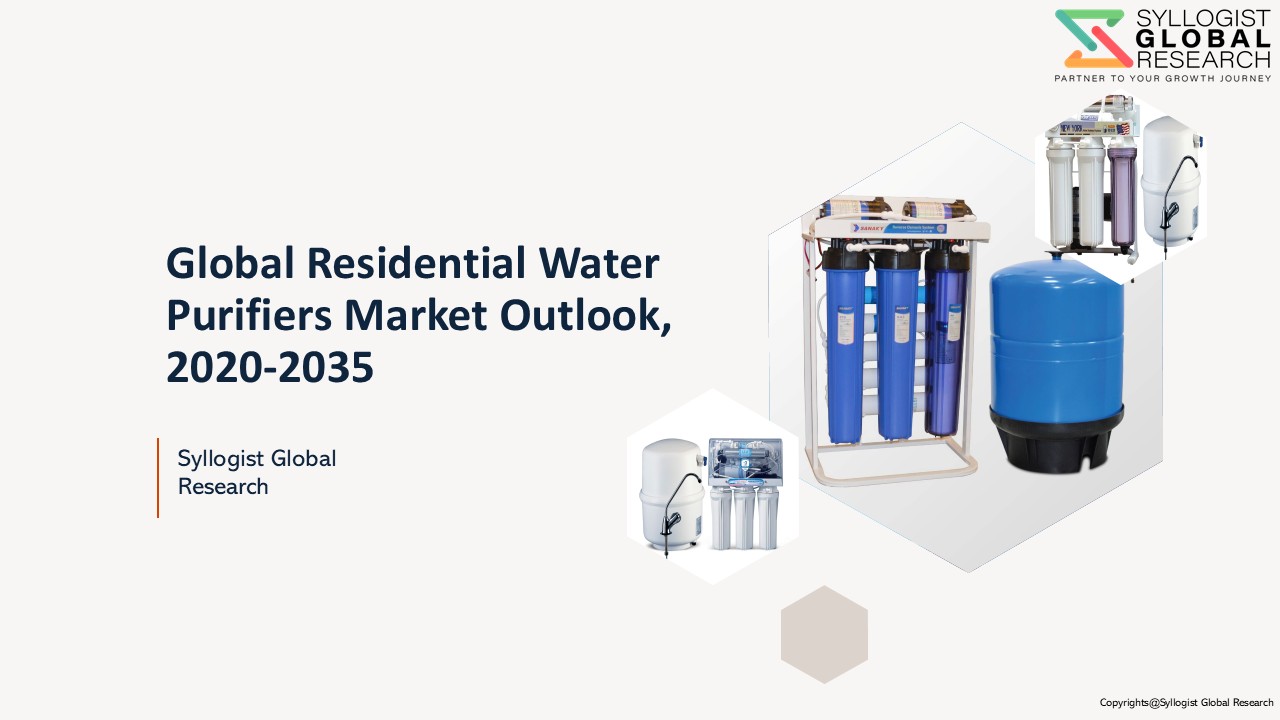
The Residential Water Purifiers market comprises a wide range of household water treatment systems, including RO (Reverse Osmosis), UV (Ultraviolet), UF (Ultrafiltration), activated carbon filters, alkaline/mineralizers, and emerging smart/IoT-enabled purifiers, designed to remove physical, chemical, and microbiological contaminants from drinking water. These systems play a critical role in ensuring safe, clean, and palatable drinking water in households across urban, semi-urban, and rural regions. Residential purification technologies help address rising concerns related to TDS (Total Dissolved Solids), microbial contamination, heavy metals, pesticide residues, and hardness, while also reducing dependence on bottled water. Over the past two years, the market has been influenced significantly by deteriorating water quality, rising health awareness, supply-chain fluctuations in membranes and filters, evolving drinking water regulations, and accelerating adoption of digital and service-centric purifier models.
Market Insights
Global demand for residential water purifiers has been heavily shaped by escalating concerns regarding water contamination driven by industrial effluents, aging pipelines, high TDS levels, and microbial outbreaks. Periods of supply-chain disruptions (especially from membrane-manufacturing hubs like China) and price fluctuations in pumps, plastics, and electronic components influenced purifier availability and product pricing in 2021 and 2022. Rising public awareness around waterborne diseases, increasing penetration of smart appliances, and the expansion of service networks in Tier 2–4 towns further accelerated market growth.
In 2023, demand stabilized due to normalization of component supply chains and the launch of cost-optimized RO+UV+UF systems across major brands. However, overall industry consumption remains strong, supported by urbanization, premiumization trends, and aggressive marketing by OEMs and digital-first consumer appliance brands. The sector is increasingly shaped by sustainability concerns, particularly regarding RO wastewater ratios, plastic waste from filters, and power consumption. Manufacturers are responding through innovations such as zero-waste RO, improved membrane efficiency, IoT-based performance monitoring, and predictive filter replacement alerts.
Industry projections indicate that the global residential water purifier market will grow at a steady CAGR of 6–8% between 2026 and 2035, with Asia-Pacific, Latin America, and the Middle East driving the majority of volume demand due to poor municipal water quality and rapid household penetration. In contrast, North America and Europe are experiencing a transition toward smart connected purifiers, modular filters, and high-end countertop systems aligned with lifestyle-based consumption trends.
Regulatory tightening, especially concerning RO wastewater norms, heavy metal limits, and microbial removal standards, is reshaping product development, pushing manufacturers to invest in advanced membranes, improved UV chambers, and integrated multi-stage purification systems. However, the market remains vulnerable to fluctuations in electronics and membrane prices, high servicing costs, and the growing need for standardized quality checks across the fragmented after-sales ecosystem. Increasing consumer focus on health, convenience, digital control features, and brand reliability is also influencing competitive differentiation.
Market Dynamics: Drivers
Rising household awareness of water contamination, urban expansion, declining pipeline integrity, growing TDS levels, and frequent microbial outbreaks are key drivers boosting purifier adoption. The shift toward RO+UV+UF multi-stage systems is strengthened by improvements in affordability, EMI-based purchasing, and expansion of service networks by major brands. Digital transformation, including IoT-led filter monitoring, subscription-based AMC plans, and app-integrated diagnostics, also enhances consumer engagement. Government initiatives promoting safe drinking water and public health further support market expansion.
Market Dynamics: Challenges
The industry faces major challenges including high dependency on imported membranes and electronic components, increasing cost pressures, and regulatory scrutiny related to water wastage in RO systems. Servicing quality remains inconsistent due to fragmented third-party networks, while counterfeit filters and non-certified products pose risks to consumers and branded manufacturers. Environmental concerns around RO reject water and plastic cartridge disposal are accelerating demand for sustainable designs. Additionally, low consumer awareness in rural areas, affordability constraints, and lack of standardized performance metrics impact market penetration.
Market Segmentation
Based on Product Type, the Global Residential Water Purifiers Market is segmented into:
- RO Purifiers
- UV Purifiers
- UF Purifiers
- Activated Carbon-Based Purifiers
- Gravity/Non-Electric Purifiers
- Smart/IoT-Enabled Purifiers
- Multi-Stage Systems (RO+UV+UF, RO+Alkaline, etc.)
- Others
Based on Technology Configuration:
- Single-Stage Purification Systems
- Multi-Stage Purification Systems
- Zero-Waste RO Systems
- Hot & Cold RO Systems
- Modular Countertop Systems
Based on Distribution Channel:
- Retail Stores
- Online/E-Commerce
- Direct-to-Home Sales
- Authorized Service Centers
- Subscription & Rental Platforms
All market revenues are presented in USD, while volumes are expressed in units sold or installed-base penetration metrics.
Historical Year: 2020–2025 | Base Year: 2026 | Estimated Year: 2027 | Forecast Period: 2028–2035
Key Questions this Study Will Answer
- What are the key market statistics and forecasts (market size by value and volume, technology shares, competitive landscape) for the Global Residential Water Purifiers Market?
- What are the region-wise market dynamics, growth drivers, challenges, water-quality patterns, and adoption trends?
- What are the key technological innovations, regulatory changes, sustainability norms, and opportunities shaping the purifier ecosystem?
- Who are the leading competitors, and how do they benchmark across technology, pricing, distribution network, service capability, and brand equity?
- What consumer insights emerge from surveys, interviews, and household-level assessments conducted as part of the market study?
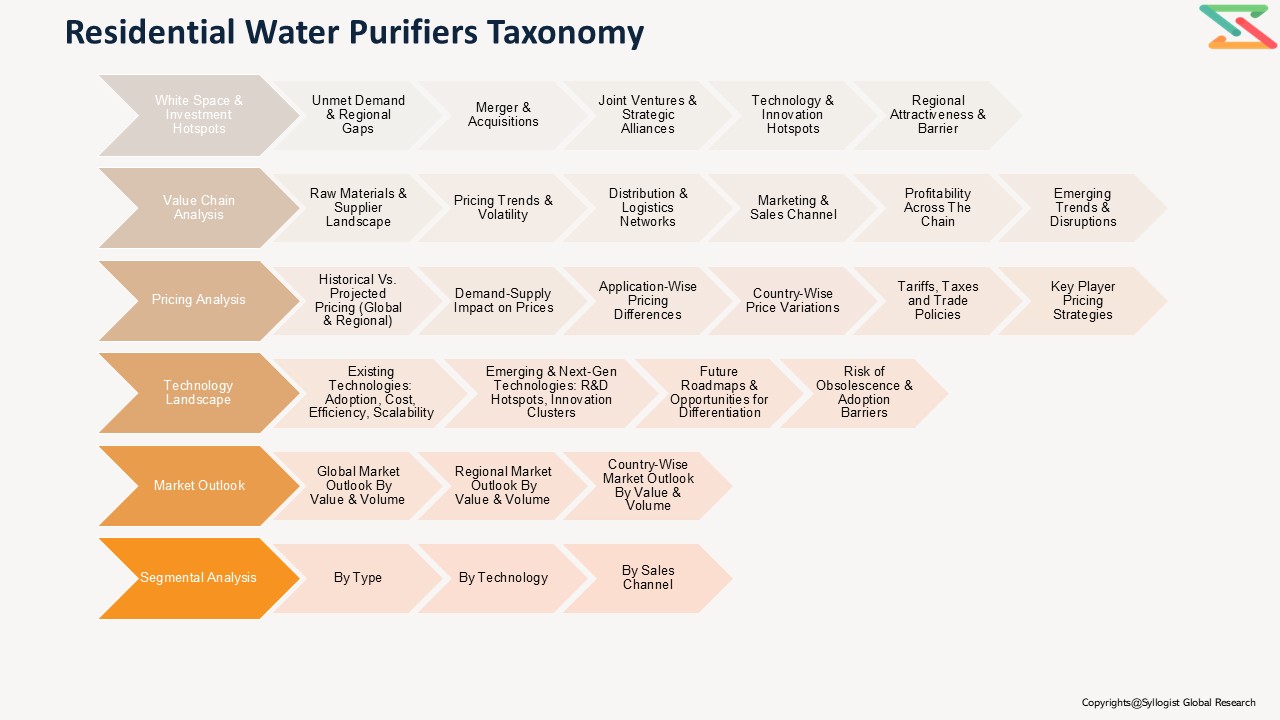
- Market Foundations & Dynamics
- Introduction
- Product Overview (Definition & Scope of Residential Water Purifiers: RO, UV, UF, Activated Carbon, Smart/IoT Purifiers)
- Residential Water Purifier Value Chain Overview (Components → Assembly → Distribution → Installation → After-Sales Service)
- Research Methodology
- Executive Summary
- Major Trends Shaping the Market (RO+UV+UF Adoption, Smart Purifiers, Rising Water Contamination, Service-Based Models)
- Short-Term vs. Long-Term Opportunities
- Comparison of Key Purification Technologies (RO, UV, UF, Activated Carbon, Alkaline/RO+UV Systems)
- Scenario Planning (Base, Optimistic, Conservative Adoption of Smart & Premium Systems)
- Sensitivity Analysis (TDS Levels, Filter Replacement Costs, Water Quality Variability, Regulatory Changes)
- Identification of Regional Growth Hotspots
- Market Dynamics
- Drivers
- Restraints
- Opportunities
- Challenges
- Porter’s Five Forces Analysis
- PESTLE Analysis
- Introduction
- Market Ecosystem & Value Chain
- Overview of Value Chain Participants
- Component Manufacturers (RO Membranes, Pumps, Filters, Cartridges, Sensors)
- OEM Assemblers & Brand Owners
- Technology Providers (UV Systems, IoT Platforms, TDS Sensors)
- Distribution Channels (Retail, Online, Direct-to-Home)
- Installation & Service Providers
- Raw Material & Equipment Suppliers
- Flow of Value & Material Through the Chain
- Value Addition & Margins at Each Stage
- Manufacturing
- Assembly & Quality Testing
- Branding & Distribution
- After-Sales Service & AMC
- Integration Trends (Backward integration into membranes; forward integration into service platforms)
- Impact of Vertical Integration
- Mapping of Roles & Interdependencies
- Market Trends & Developments
- White Space Analysis
- Demand Supply Analysis
- Demand–Supply Gaps (Service Network Gaps, Regional Water Quality Variance, Low Penetration in Rural Areas)
- Unmet Needs (Low-Cost Filters, Smart Diagnostics, Affordable AMC Models)
- Risk Assessment Framework
- Political / Geopolitical Risk (Import Dependency of Membranes & Pumps)
- Operational Risk (Service Delays, Product Failure Rates)
- Environmental Risk (Wastewater from RO, Filter Disposal Compliance)
- Financial Risk (Input Cost Variability, Supply Chain Disruptions)
- Regulatory Framework & Standards
- Global Regulatory Overview
- Drinking Water Purification Standards (ISO, BIS, WHO Guidelines)
- Electrical & Safety Regulations for Household Appliances
- RO Wastewater & Efficiency Compliance (Local Water Conservation Norms)
- Local Country Regulations (BIS Standards, Import Norms, Consumer Safety Laws)
- Manufacturing, Storage & Distribution Regulations
- Safety & Quality Standards (Microbial Removal Efficiency, TDS Reduction Compliance)
- Environmental Compliance (Wastewater Ratio, Plastic Use Restrictions)
- Liability & Insurance Requirements
- Digital Traceability (App-Based Monitoring, QR-Coded Filters)
- Technology Landscape
- RO Filtration Technologies (Membrane Enhancements, Low-Waste RO)
- UV & UF Purification Innovations
- Multi-Stage Filtration Technologies (RO+UV+UF+MF+Alkaline)
- Smart Purifier Technologies (IoT Monitoring, Auto-Alert Filters, App Integration)
- Appliance Design & Efficiency Improvements
- Future Outlook (AI-Based Diagnostics, Filter Life Prediction, Zero-Waste RO)
- Global, Regional & Country Forecasts (2019–2029)
- Global Residential Water Purifiers Market Outlook (Value & Volume)
- Market Share by:
- Product Type: RO, UV, UF, Gravity, Smart Purifiers
- Technology Type (Single, Multi-Stage, IoT-Enabled)
- Distribution Channel (Retail, Online, Direct Sales)
- Application (Urban, Semi-Urban, Rural)
- Price Range (Entry-Level, Mid-Range, Premium)
- Ownership Model (Purchase, Rental, Subscription)
- Company
- Regional Outlook (North America, Europe, Asia-Pacific, Latin America, Middle East & Africa)
- Pricing Analysis
- Overview of Pricing Structures (Product Price, AMC Cost, Filter Replacement Cost)
- Price Trends by Product Type (RO, UV, UF, Smart Systems)
- Cost Benchmark
- RO vs UV vs UF Cost Comparison
- Imported vs Domestic Components
- Price Sensitivity (Membrane Costs, Plastic Housing, Electronics)
- Historical Pricing (2019–2023)
- Forecast Pricing (2024–2029)
- Factors Influencing Price
- Raw Material Availability
- Energy Costs
- Logistics
- Regulatory Burden
- R&D & Certification Costs
- Regional Pricing Differentiation
- Impact of Sustainability Transition
- Competition Outlook
- Market Concentration vs Fragmentation
- Company Market Shares
- Competitive Strategies
- Capacity Expansion
- Product Portfolio Diversification (RO+UV+UF, Smart Purifiers)
- Distribution Strengthening
- Technology Collaborations
- Benchmarking Matrix (Technology vs Price vs Service Capability)
- Recent Developments (New Launches, Partnerships, Service Model Innovations)
- Cost Structure & Margin Analysis
- Detailed Cost Breakdown
- Average Cost per Stage
- Profitability & Margin Distribution
- Sensitivity Analysis (Component Costs, Service Costs)
- Cost Reduction Opportunities (Localization, Automation, Modular Filters)
- Business Models & Strategic Insights
- Manufacturer–Driven Models
- Service-Driven Subscription Models
- Direct-to-Consumer Digital Models
- Rental & Pay-Per-Use Models
- PPP Models for Community Water Purification
- SWOT of Leading Business Models
- Investment & Financial Analysis
- CAPEX & OPEX Benchmarks for Assembly & Service Network Setup
- Payback & IRR Sensitivity
- Financial Modeling Assumptions
- Revenue Streams: Product Sales, AMC, Rental, Subscription
- Investment Case Studies
- Funding Landscape (Consumer Appliance Investors, PE, Strategic Investors)
- Sales & Distribution Channel Analysis
- GTM Channels (Retail, Online, Direct Sales)
- Channel Share by Region
- Typical Channel Flow Diagram (OEM → Distributor → Retailer → Consumer)
- Sales Process & Consumer Engagement
- Distribution Strategy of Leading Players
- Emerging Trends (AMC Subscriptions, IoT Monitoring, E-commerce Growth)
- Strategic Recommendations & Roadmap
- Competitor Strategic Initiatives
- Future Outlook (2024–2029: Smart Purifiers, Zero-Waste RO, Subscription Models)
- Strategic Recommendations for Stakeholders
- Adoption Roadmap for Smart & Sustainable Purifiers
- Tailored Recommendations (OEMs, Service Providers, Investors, Regulators)
- Key Success Factors (Service Network Strength, Technology Innovation, Compliance, Brand Trust)