Market Definition
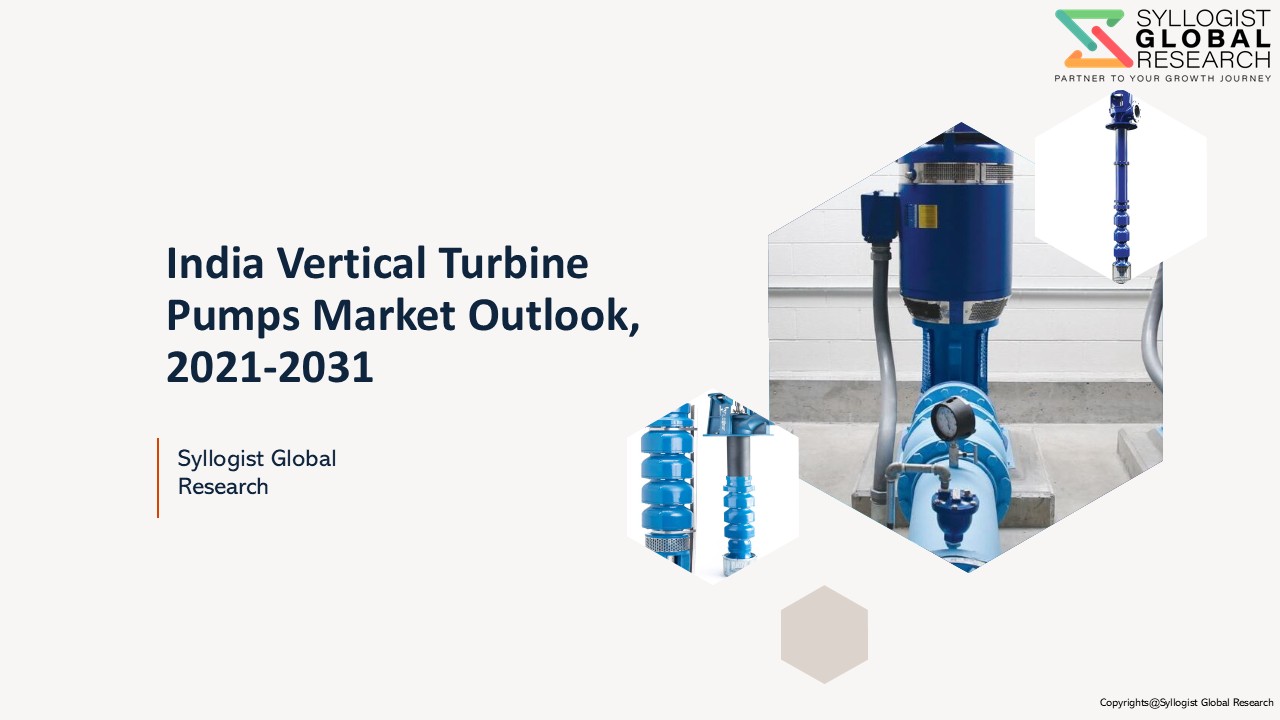
The India Vertical Turbine Pumps (VTP) Market comprises specialized centrifugal pumping systems designed primarily for deep-well water extraction, high-head water transfer, lift irrigation, municipal water supply, industrial intake systems, and high-capacity infrastructure applications. Vertical turbine pumps are typically configured as line-shaft vertical turbine pumps, submersible vertical turbine pumps, and engineered high-head multi-stage VTP systems.
These pumps play a critical role in India’s groundwater extraction, irrigation modernization, municipal water augmentation schemes, mining dewatering, power plant cooling water intake, and industrial process water circulation. Given India’s heavy dependence on groundwater for agriculture and rural water supply, vertical turbine pumps form a backbone technology in ensuring water access, irrigation efficiency, and infrastructure resilience.
Over the past two years, the India VTP industry has been influenced by groundwater depletion in key agricultural states, expansion of lift irrigation schemes, Jal Jeevan Mission (JJM) and AMRUT municipal projects, industrial water security investments, and rising demand for higher efficiency hydraulics. Volatility in cast iron, stainless steel, copper windings, and motor components, along with tender-based procurement cycles, have also shaped pricing and margin structures.
Market Insights
Demand for vertical turbine pumps in India is structurally aligned with irrigation depth increases, rural water supply expansion, industrial growth corridors, and mining sector activity. States such as Maharashtra, Karnataka, Tamil Nadu, Andhra Pradesh, Rajasthan, Gujarat, and parts of North India have witnessed increasing demand for high-head VTPs due to falling water tables and lift irrigation requirements.
Between 2021–2023, fluctuations in steel prices, motor component costs, and logistics impacted OEM margins. However, strong public infrastructure spending under central and state government water schemes supported demand stability. By 2024–2025, improved supply chains and higher allocation toward irrigation and municipal water infrastructure restored momentum.
The industry is increasingly shaped by:
- Higher-efficiency bowl and impeller designs
- Increased adoption of VFD-integrated pumping systems
- Solar-powered vertical turbine pump installations (agriculture & rural schemes)
- Corrosion-resistant metallurgy for saline and coastal regions
- Bundled system selling (pump + motor + control panel + protection systems)
Unlike mature global markets driven largely by replacement demand, India remains a growth-oriented installation market, particularly in agriculture, municipal augmentation, and industrial expansion.
Industry projections indicate that the India Vertical Turbine Pumps Market will grow steadily between 2027 and 2031, supported by irrigation modernization, groundwater regulation compliance, rural electrification, mining expansion, and water infrastructure development across Tier-2 and Tier-3 cities.
Market Dynamics: Drivers
Key growth drivers in India include:
- Declining groundwater levels necessitating deeper borewell extraction
- Expansion of lift irrigation schemes across water-scarce states
- Jal Jeevan Mission and AMRUT municipal water supply projects
- Industrial corridor development and process water demand
- Mining and dewatering applications
- Power plant intake and cooling water requirements
- Rising energy efficiency focus and motor performance upgrades
- Solar-powered irrigation pump schemes under state subsidies
Government-backed irrigation expansion, river-linking projects, and rural water access programs are significantly boosting demand for medium- and high-HP vertical turbine systems.
Increasing awareness of lifecycle cost benefits, efficiency improvements, and reliability in deep-well applications is shifting buyers from conventional pumping alternatives toward engineered VTP solutions.
Market Dynamics: Challenges
Despite strong structural demand, the industry faces multiple challenges:
- Raw material price volatility (castings, shafts, stainless steel, copper windings)
- Power supply instability in rural regions
- Groundwater extraction regulations in certain states
- Intense price competition from regional and unorganized manufacturers
- Delays in public tender approvals and project execution
- High CAPEX requirements for engineered high-head systems
- Dependence on motor and VFD supply chains
In agricultural-heavy markets, subsidy disbursement delays and monsoon variability can temporarily impact demand. In institutional segments, procurement cycles and lowest-bid tendering structures compress margins.
Market Segmentation
By Product Type
- Line Shaft Vertical Turbine Pumps
- Submersible Vertical Turbine Pumps
- Engineered / High-Head Multi-Stage VTPs
By Application
- Water Transfer
- Dewatering
- Pressure Boosting (Process)
- Fire Fighting
- HVAC
- Water Boosting (Utility)
- Others
By End Use
- Commercial Buildings
- Lift Irrigation
- Agriculture (Excluding Lift Irrigation)
- Municipal Water Supply
- Mining
- Chemicals
- Oil & Gas
- Power Generation
- Others
By Power Rating
- Up to 15 HP
- 15 – 50 HP
- 50 – 150 HP
- Above 150 HP
By Drive / Installation Type
- Electrical / Grid-Powered Systems
- Solar-Powered Vertical Turbine Pumps
- Hybrid (Solar + Grid)
By Sales Channel
- Dealer / Distributor Network (Agriculture-heavy)
- EPC / Tender-Based Institutional Sales
- Direct Industrial Contracts
- Aftermarket & Service Contracts
By Material of Construction
- Cast Iron / Ductile Iron
- Stainless Steel & Duplex Steel
- Bronze / Special Alloys
By Market Structure
- New Installation
- Replacement
- Rental
All market revenues are presented in USD, with volumes expressed in units installed annually.
Historical Year: 2021–2024
Base Year: 2025
Estimated Year: 2026
Forecast Period: 2027–2031
Key Questions this Study Will Answer
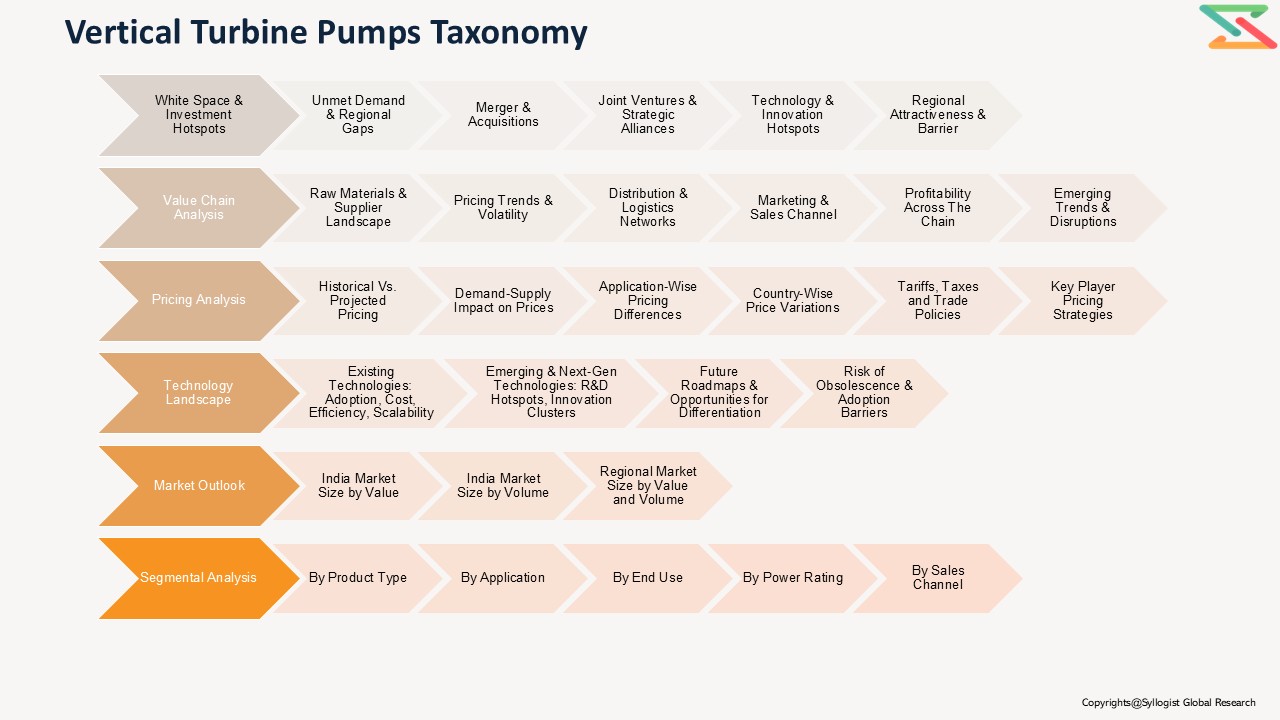
- What are the key market statistics and forecasts (market size by value & units, product type shares, power band distribution) for the India Vertical Turbine Pumps Market?
- What are the state-wise demand patterns, irrigation trends, groundwater depth impact, and infrastructure investments shaping growth?
- How are energy efficiency mandates, solar pumping schemes, and VFD integration transforming the VTP segment?
- Who are the leading competitors, and how do they benchmark across product range, state presence, channel strength, service network, and pricing strategy?
- What insights emerge from interviews with EPC contractors, irrigation equipment distributors, municipal authorities, mining operators, and industrial end-users conducted during the study?
- What white-space opportunities exist across high-head engineered VTPs, corrosion-resistant metallurgy, solar-integrated systems, and aftermarket service contracts?
- Executive Summary
- India Vertical Turbine Pumps Market Snapshot (Value, Units, ASP)
- Key Findings (Demand Drivers, Segment Winners, Hotspots)
- 2026–2031 Outlook
- Competitive Landscape Summary (Top 5 Companies)
- Study Scope, Definitions & Methodology
- Product Definition and Scope Inclusions/Exclusions
- Segmentation Framework
- Market Sizing Approach
- Primary Research Approach (OEMs, EPCs, Dealers, End-Users)
- Data Validation Logic and Assumptions
- Forecast Methodology (Drivers, Constraints, Scenario Design)
- India Vertical Turbine Pump Industry Overview
- Role of VTPs In India’s Water & Industrial Infrastructure
- Where VTPs Compete Vs Submersible, Split Case, Multistage, Booster Sets
- Procurement Structure: Agriculture Vs Institutional Vs Industrial
- Installed Base and Replacement Cycle Overview
- Technology Evolution
- Market Drivers, Challenges & Trends
- Drivers
- Constraints
- Emerging Trends
- Submersible VTP Adoption Shift
- Energy Efficiency & BEE/VFD Pull
- IoT Condition Monitoring
- Solar/Hybrid Pumping Economics
- Demand Risk Assessment
- Policy, Regulatory & Standards Landscape (India)
- Government Schemes Affecting Pumping Demand
- Tender Norms and Qualifying Criteria (Municipal/PSU/EPC)
- Energy Efficiency and Motor/VFD Standards
- Solar Pump Policy Ecosystem and Subsidy Structure
- Quality, Materials and Testing Standards
- India Vertical Turbine Pumps Market Size & Forecast, 2021-2031
- Market Size & Forecast by Value, 2021-2031
- Market Size & Forecast by Volume, 2021-2031
- Demand-Supply Framework (Domestic Production Vs Imports)
- Sensitivity Analysis (Capex, Power Tariffs, Commodity Prices)
- Market Size & Forecast by Product Type, 2021-2031
- Line Shaft Vertical Turbine Pumps
- Submersible Vertical Turbine Pumps
- Engineered / High-Head Multi-Stage VTPs
- Competitive Intensity by Product Type
- Market Size & Forecast by Application, 2021-2031
- Water Transfer
- Dewatering
- Pressure Boosting (Process)
- Fire Fighting
- HVAC
- Water Boosting (Utility)
- Others
- Market Size & Forecast by End Use, 2021-2031
- Commercial Buildings
- Lift Irrigation
- Agriculture (Excl. Lift Irrigation)
- Municipal
- Mining
- Chemicals
- Oil & Gas
- Power
- Others
- End-Use Purchase Decision Map (Specifier, Influencer, Buyer)
- Market Size & Forecast by Power Rating, 2021-2031
- Market Share & Forecast by Sales Channel
- Application-Wise Sales Split
- Application-Wise Channel Preference and Buying Criteria
- Market Size & Forecast by Region + State-Level Deep Dive
- East India (Leading 5 States Share + State Profiles)
- West India (Leading 7 States Share + State Profiles)
- North India (Leading 7 States Share + State Profiles)
- South India (Leading 7 States Share + State Profiles)
- State-Wise Market Size
- State-Wise Channel Split
- State-Wise Demand Drivers
- Market Size & Forecast by Drive / Installation Type
- Electrical / Grid-Powered Systems
- Solar-Powered Vertical Turbine Pumps
- Hybrid (Solar + Grid)
- Adoption Forecast by Drive Type
- Market Size & Forecast by Material of Construction
- Cast Iron / Ductile Iron
- Stainless Steel & Duplex Steel
- Bronze / Special Alloys
- Material Selection by Application
- Material-Wise Pricing Premium and Lifecycle Impact
- Market Size & Forecast by Aftermarket & Replacement Market (Component-Level Sizing)
(Independent Component Market Sizes Provided; Excluded from Primary Pump Market Valuation)
- Component-Wise Market Sizing
- Pump Bowls
- Impellers
- Vertical Shafts
- Column Pipes
- Discharge Heads
- Bearings, Wear Rings, Couplings
- Customer Analysis (60–70 Accounts)
- Customer Segmentation Framework (By End-Use, Region, Buying Mode)
- List Of 60–70 Key Customers
- Organization Name
- Sector/End-Use
- State/City
- Typical Application
- Preferred Procurement Mode (Tender/EPC/Direct/Dealer)
- Typical Hp Band
- Current Supplier Landscape (Where Available)
- Customer Buying Criteria & Vendor Scorecard
- Competitive Landscape & Benchmarking (Top 10)
- Market Share Estimates (Value and Units)
- Competitive Benchmarking for Top 5 Companies
- Portfolio Breadth
- Application Strengths
- State/Channel Footprint
- Delivery Lead Times & Service Network Depth
- Competitive Positioning Matrix (Value Vs Application Complexity)
- Distributor/EPC Relationships Mapping
- Strategy Moves (New Launches, Channel Expansion, Localization)
- State-Wise Sales & Marketing Strategy Playbook
- State Prioritization Framework (TAM, Growth, Channel Access, Competition)
- East India: State-Wise Strategy (Top 5 States)
- West India: State-Wise Strategy (Top 7 States)
- North India: State-Wise Strategy (Top 7 States)
- South India: State-Wise Strategy (Top 7 States)
- Channel Playbook by State (Dealer Activation Vs EPC Capture Vs Direct Key Accounts)
- Messaging & Positioning by Segment
- Go-To-Market KPIs (Dealer Productivity, Service Attach, Tender Pipeline)
- Forecast Scenarios & Opportunity Sizing
- Scenario Assumptions
- Product/Application/End-Use Opportunity Pockets
- White Space Opportunities
- Risk Mitigation Strategies
- Strategic Recommendations